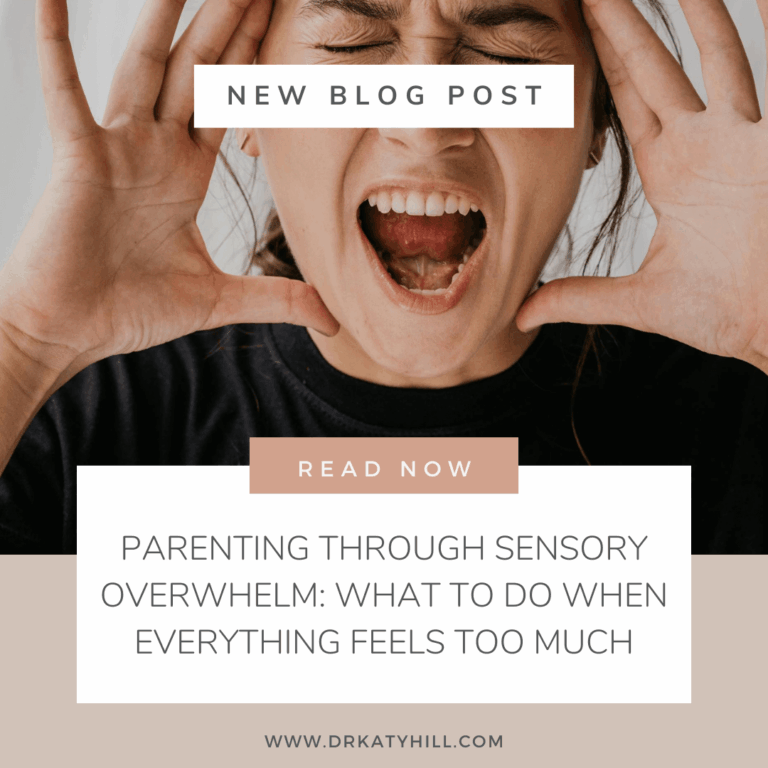
The mess. The noise. The constant chatter and clingy, sticky hands. Sometimes parenting doesn’t just feel hard – it feels loud, relentless, and physically too much.
If you’ve ever found yourself on the edge of snapping because you can’t take one more sound, one more question, or one more touch, you’re likely experiencing sensory overwhelm. And you’re not alone.
Let’s talk about how to recognise sensory overwhelm and I’ll introduce 6 practical strategies to use when you’re feeling overstimulated and need to come back into balance.
What Is Sensory Overwhelm?
Sensory overwhelm (also called overload or overstimulation) happens when your brain receives more input than it can comfortably process in the moment. That input might be loud noises, physical touch, visual clutter, or the general busyness of a day filled with children, tasks, and demands. When the volume of life gets too high – literally and figuratively – your nervous system becomes overstimulated, and your body may shift into fight/flight/freeze mode.
This can look like:
- You feel like screaming at the smallest thing
- You want to hide in a bathroom, bedroom or your car just to be alone
- You recoil from your child or partner’s touch
- You feel emotionally flooded and can’t think clearly
- You ‘zone out’ or shut down
Sensory overwhelm is common in parenthood but especially for those whose systems are wired to process input more intensely. This includes people who identify as HSPs (Highly Sensitive Person; known as ‘sensory processing sensitivity’ in the research literature), as well as those who are neurodivergent; including individuals with ADHD, autism, or sensory processing disorder (SPD).
These aren’t ‘issues’ to fix – they’re simply different ways of experiencing the world. And they may not have been as difficult to manage before you had children and had much more control over your sensory environment. The intensity of parenting can make these sensory triggers feel just too much.
There are simple, practical things you can do to find a little more control and bring yourself back from fight/flight/freeze into a more regulated state.
6 Practical Strategies to Use When You Feel Overstimulated
These strategies are designed to be accessible even in the middle of a busy parenting day. You don’t need an hour of silent solitude (although grab that opportunity whenever it arises!). You just need some small and doable shifts to help your body reset.
1. Move Your Body to Reset Your Brain
The stress of sensory overstimulation is physical; tension and stress hormones are building up and moving your body can help discharge that. Try:
- Standing up and shaking out your hands and feet
- Putting your hands in cold water for 30 seconds
- Stretching your arms overhead or touching your toes
- Stepping outside for 60 seconds of fresh air
2. Turn the Volume Down
See if there are times where you can intentionally limit the sensory input coming in:
- Put on noise-cancelling headphones or Loop earplugs
- Turn off background music, radio or screens
- Lower your voice to a whisper; it often makes kids quiet down to hear you
- Play calming instrumental music instead of anything with lyrics
- Close your eyes or use an eye mask
3. Simplify the Space Around You
Visual clutter can be surprisingly triggering. When your eyes are constantly scanning piles of toys, dishes, and laundry, your brain stays in alert mode.
Try these quick resets:
- Toss toys into a basket or laundry bin and push it out of view
- Close one door to a messy room
- Turn off overhead lights and use a small lamp instead
- Set a timer for 2 minutes and do one small tidy task
- Fill a bag with donation items for the charity shop – clearing clutter feels good fast
You don’t have to gut your house or live a minimalist lifestyle (unless you want to), just reduce the amount of input your brain is processing.
4. Use Your Senses to Soothe Your System
Sensory input can be calming too, if you choose it intentionally. Try:
- Listening to your favourite album with earbuds
- Mindfully eating or drinking something delicious
- Rubbing calming lotion into your hands
- Smelling something grounding (peppermint, lavender, orange peel)
- Sitting on the floor with your back against a wall for deep pressure
- Lying down with a weighted blanket
5. Take a Break – And Don’t Feel Guilty About It
Sometimes the most powerful thing you can do is step away even for 90 seconds and have a reset.
Taking a break isn’t selfish; it’s self-care that facilitates child-care. You’re not rejecting your child. You’re modelling emotional regulation and boundary-setting which are incredible life skills for them to witness. Try:
- Sitting on your backdoor step, taking three deep breaths
- Take a shower
- Sitting in your parked car with a podcast
- Lying flat on the floor and staring at the ceiling
- Letting your kids watch a show while you take a guilt-free break
- Putting your phone out of sight for half an hour to reduce digital noise
6. Say What You Need (Even If It Feels Awkward)
If you’re overstimulated, name it. It can feel clunky at first, but saying what you need out loud is the first step to getting support.
Try saying:
- “I’m overstimulated. Can you take over for 10 minutes?”
- “I can’t think straight and I’m getting really irritable; I’m going to take a break, see you in 15 minutes.”
- “I’m at capacity – I’m going to step away so I can come back calmer.”
- “I love you. I’m feeling touched out and need a few minutes alone.”
- “My brain is full – I’ll come back in five minutes when I can really listen.”
You don’t need to justify or over-explain. You’re just letting others know what you need in order to show up the way you want to.
The Parental Burnout Quiz
Curious what your own parental burnout score is? Download the free assessment and get your score – plus expert tips on how to reduce it.
what helps over time
The strategies above are great for the moment-to-moment intensity, but over time, you can create a home rhythm that affords more long-standing sensory support.
This might look like:
- Talking to your kids (in an age-appropriate way) about what sensory overload feels like for you and helping them notice their own preferences too
- Noticing what times of day feel most intense for your nervous system, and planning mini-breaks or scheduling support around them
- Building designated quiet time into your family routine – even a routine 15 minutes after busy periods like meal times, school pick up etc can make a difference
- Normalising the idea that everyone needs breaks sometimes; not because anything is wrong, but because everyone’s brain and body need rest
When these small practices become part of your family rhythm, you may find your whole household starts to feel a little calmer – not just for you, but for everyone else too.
you're not broken; you're overloaded
If parenting feels like too much, that’s not a flaw. It’s a signal. And learning to respond to that signal instead of pushing through it is a powerful act of care.
You can love your children and need quiet. You can set limits and be deeply nurturing. And you’re allowed to make space for your needs without apology.
want more support with this?
If you’re stuck in a cycle of overstimulation, snappiness, or shutdown and nothing seems to shift it – that’s exactly what therapy can help with.
I work with parents who are overstretched, overstimulated, and overwhelmed. Together, we find simple, realistic ways to help you feel more regulated, present, and in control without needing to become someone you’re not.
I offer a free, no-pressure intro call so we can chat about what support might look like for you. You can book that here.
Let’s help your nervous system feel like a safer, steadier place to live so you can show up for your family and yourself.