
Can you feel that ‘New year, new me’ energy? It’s fresh starts everywhere I look right now; new planners, new intentions, new goals.
But if you’re a parent, the pressure to ‘start strong’ in January can find you in an already depleted place. The festive season was probably full-on (even if it was joyful) and there’s not been much time to rest before the resolutions start appearing: be calmer, be more present, sort the morning routine, fix the screen time battles, make sure everyone eats better and sleeps better and starts the term in the right shoes. It’s a lot.
Before you launch into new years’ resolutions and aim to overhaul your life, can I suggest a different approach? Can I suggest that 2026 doesn’t require you to do more, but to do less?
So much of the work I do in therapy with parents isn’t about doing more but doing less. Less of the stuff that’s making parenting harder than it needs to be. In this blog I’m going to suggest 5 things you can let go of, based on patterns I see most often in my clinical work, in the hope that 2026 can feel lighter for you and all your family.
1. Let go of performative parenting
Modern parenting seems to be much more rule-based, performance-driven and policed than in previous years. Many parents tell me that they feel like they’re parenting for an invisible audience. They’re parenting in real life – wiping noses, serving up dinner, reading bedtime stories – and feeling there’s someone watching, judging, evaluating whether they’re measuring up. Sometimes it’s not an invisible audience, it’s the Instagram comments, the WhatsApp group chats, the playground small talk, the uninvited advice. There’s a sense that they need to ‘get it right’.
It’s exhausting but it’s also inauthentic. What your child needs most is not a textbook parent but one who really sees who they are and flexes with them. In therapy we talk about parenting the child you have, as the parent you are and practice parenting according to your values, what works for your family and learning to tune out the external noise.
2. Let Go of Productivity as Identity
So many of the burnt-out parents I work with are constantly doing; managing homes, supporting partners, holding down jobs, ferrying kids to multiple after school clubs. But somewhere along the way, all that doing becomes their identity. Rest feels impossible, indulgent, or even unsafe. Productivity has become the measure of their worth, and it’s wearing them down.
This isn’t just about time management. It’s about deep-rooted beliefs: that your value lies in how much you can carry, how well you hold others together, and how little you need in return. It’s not your fault; we live in a culture that rewards over-functioning, especially in mothers and carers. But there’s a cost.
In therapy, we explore how to step out of that role. We look at what it means to separate your worth from your output, and to build in rest that isn’t earned. I often ask, “Would you want your child to measure their value this way?” If the answer is no (and it always is), then you’re allowed to stop doing it, too.

The Parental Burnout Quiz
Curious what your own parental burnout score is? Download the free assessment and get your score – plus expert tips on how to reduce it.
3. Let go of emotional self-abandonment
Parents tell me they’re running on fumes and then it turns out they’re not eating regularly, are staying up scrolling past midnight, haven’t had a moment alone in weeks and are saying yes to everything and everyone. They’re used to overriding their own needs, not just in emergencies but as a default setting. They swallow their irritation, push through their fatigue, and silence their sadness because they quietly believe that self-care is selfish.
But abandoning your own emotional needs doesn’t make you a better parent; it makes you an exhausted and resentful one. When you constantly push yourself aside, it creates distance: from your feelings, your limits, and eventually your children too.
In therapy, we work on emotional attunement: learning to check in with yourself, to name what you feel, and to make small adjustments that honour your needs. It means nurturing yourself like you nurture your children.
4. Let Go of All-or-Nothing Thinking
I see this one a lot in January. Parents arrive in therapy with long lists of resolutions: no more shouting, a consistent bedtime routine, no screens in the morning, family dinners every night. And when one of those things inevitably doesn’t go to plan (because that’s life), they feel like they’ve failed. The whole effort is abandoned until the next Monday, or the next school term, or next year. And that harsh inner voice that tells you ‘you can’t get anything right’ takes over.
Perfectionism loves all-or-nothing thinking. It convinces you that if you can’t do something flawlessly, you might as well not do it at all. But that’s not how real change happens.
In therapy, we talk about what it means to do things imperfectly on purpose. To try something in a small way, to wobble, to regroup, to keep going. The goal is not perfection; it’s flexibility. You can start again on a Thursday afternoon. You can get it wrong and still be moving forward, real change isn’t smooth and linear.
5. Let Go of Doing It All Alone
So many parents believe that they should be able to manage everything on their own; manage all the household jobs, their emotions, their children’s wellbeing, the school admin, the dentist appointments, the extra-curriculars. We know that parenting takes a village but we also live in an individualistic society that makes us reluctant to ask for help, feel guilt about burdening others and worry that asking for support somehow means we’re not cut out for parenting.
Parenting has always been a community, not a solo, job. Humans are wired for interdependence; we do better when we’re connected, when we’re supported, when we feel held.
Letting go of doing it all alone might mean asking your partner to take on more of the invisible load. Or texting a friend to say, “This week has been awful; can you remind me I’m not a terrible mum?” It might mean reminding yourself, in the hardest moments, that needing support doesn’t mean you’re failing – it means you’re human trying to hold too much on your own.
What might you let go of this year?
If you’re feeling pulled toward change this January, I want to gently remind you that you don’t need to do more. You probably already are doing too much.
Instead, consider what’s weighing you down. Which habits, expectations, or beliefs feel more like pressure than support?
Letting go isn’t giving up. It’s the beginning of something softer, more real and more sustainable. And if you’d like help with that process; I’d love to support you.
I support parents who are tired of just surviving. I help them untangle unhelpful patterns, get clear on what matters, and build a life that feels more aligned with their values not just their to-do list. Whether you’re dealing with stress, anxiety, anger or burnout, therapy can help you feel more centred, more connected, and more confident in your parenting.
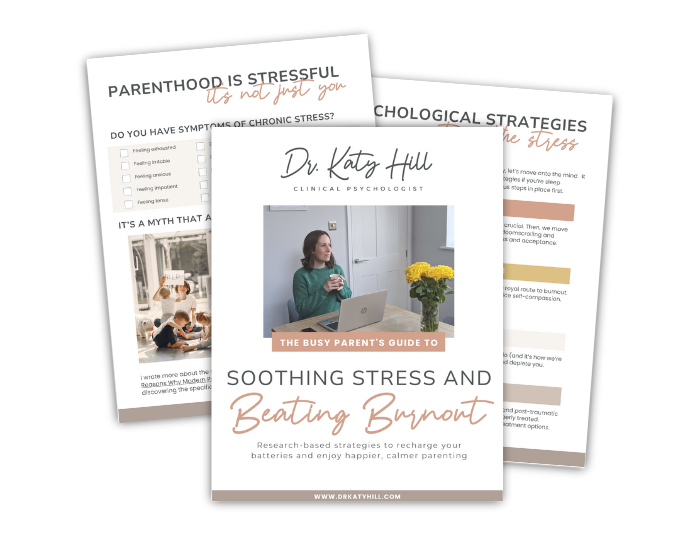
I can help: you can download my free guide, The Busy Parent’s Guide to Soothing Stress and Beating Burnout or find out more about working together in therapy here.
Let this be the year that you gently come back to yourself.