
Christmas is a really busy time of year for parents where the everyday emotional and practical load increases. This is especially the case of parents of primary school aged children who suddenly find that every other day is a carol concert, Christmas jumper day or nativity. Underneath the busyness, there’s something deeper happening: a tangle of emotions that don’t always make sense until you slow down enough to feel them.
You might find yourself unexpectedly tearful during a carol service, tense at a family dinner, or strangely flat when the presents are opened and the moment passes. Joy might be closely followed by exhaustion. Nostalgia might arrive hand-in-hand with grief. You might be looking forward to ‘the big day’ and dreading it at the same time.
I wrote this blog to help you understand the emotional complexity of this season a little more and learn ways to offer yourself a little more space and compassion.
Why Christmas Feels So Emotionally Charged
There are so many reasons why Christmas stirs so much up in us.
Cultural Pressure to Be Joyful
From adverts to Instagram, we’re surrounded by images of harmonious families in beautifully lit rooms, perfectly wrapped gifts, and effortless joy. It sets an impossible standard and any deviation from that image can feel like failure, even if we know better intellectually.
Ghosts of Christmas Past
Christmas is often steeped in tradition, which means it can bring sharp reminders of what’s changed. The absence of a loved one. The memory of happier times. Or a wish for the kind of family dynamic you never had. Grief has a way of showing up uninvited at Christmas and it’s rarely tidy or convenient.
Overstimulation and Sensory Overload
The music, lights, disrupted routines, extra sugar and booze, crowded houses, school and community events: it’s a lot, especially for neurodivergent children (and parents). Even when everything is fun the sheer intensity of it can tip sensitive nervous systems into overload.
Family Dynamics
Old family patterns can re-emerge quickly. Being back in a childhood home or around extended family can bring up complex feelings, roles you thought you’d outgrown, or unspoken tensions. Navigating that while also parenting can feel especially hard.
Unrealistic Expectations
There’s often an unspoken hope that Christmas will be the moment when everything feels right. A magical way to end the year. When the family connects, the kids are happy, and peace finally settles in. And while beautiful moments can happen, hinging too much on one day often leads to disappointment.
Dysregulated kids
Many children feel completely unmoored in December. The anticipation’s been building at nursery/school and on the TV for weeks, the sharp change in routines, less sleep, fresh food and exercise, the overstimulation – it’s a recipe for emotional volatility. And when they’re overwhelmed, they need co-regulation but the adults around them may also be running on empty too.
Preparing for the emotional rollercoaster
You can’t eliminate all the ups and downs; but you can prepare for them.
Expect the Fluctuation
Forewarned is forearmed. Expect that there will be emotional ups and downs and you won’t be confused when you’ve felt joy, grief, irritation and nostalgia all in one morning. You won’t berate yourself for not feeling anything other than festive because you’ll know it’s just the normal, emotional ebb and flow of being a human during this emotionally loaded time.
Make Space for All Feelings
Understanding that there’s going to be emotional ebb and flow leads on to the next part – giving yourself (and your children) permission to feel it all. Laughter, grief, overstimulation, boredom, anger, joy; letting it be as it is. You don’t need to fix or control the emotional landscape. Just noticing and allowing can make a huge difference.
Identify Your Flashpoints
Think back to previous years. Are there particular moments that tend to trigger tension? Hosting, travelling, meal prep, bedtime meltdowns? Anticipating these points helps you avoid them this year, or plan to handle them with more kindness and fewer unrealistic expectations.
Create Anchors of Calm
Think ahead about how you’ll build in quiet, grounding moments for you and your children. This might mean slow mornings, quiet time in separate rooms after lunch, a short walk, or keeping some days completely plan-free.
Plan a Softened Reaction
You’re bound to be triggered multiple times over the Christmas holidays so it’s a great idea to plan how you’re going to respond in that tricky moment. Decide now how you’re going to handle triggers based on what you know works best for you. Pausing to take deep breaths or remembering a supportive mantra can be really helpful; as can a plan to step away for a few minutes before responding.
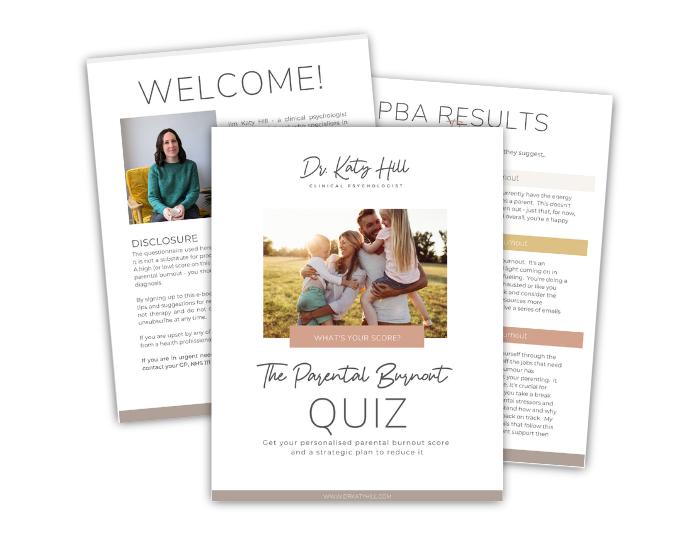
The Parental Burnout Quiz
Curious what your own parental burnout score is? Download the free assessment and get your score – plus expert tips on how to reduce it.
In the moment tools for emotional surges
At some point, you’ll probably feel a surge of emotions or overwhelm; here are some ways to support yourself through it.
Pause and Breathe
It’s simple, but powerful. Before reacting, pause. Exhale slowly. Give yourself a moment to find your footing.
“Name it to Tame it”
Putting words to your feelings helps regulate them. “I’ve got some really sad memories popping up right now.” “This feels really overwhelming.” “I’m frustrated and overstimulated.” Naming the feeling creates distance and reduces reactivity.
Ground Through Your Senses
Use the 5-4-3-2-1 technique: Name 5 things you can see, 4 you can touch, 3 you can hear, 2 you can smell and 1 you can taste. You can also keep a grounding item (like a smooth stone or essential oil roller) nearby to help bring you back to the present.
Offer Yourself Compassionate Encouragement
Try saying something like, “This is hard, and I’m doing my best.” Or, “It makes sense that I would find this family event hard; let me be gentle with myself today.” You’d say it to a friend. You can say it to yourself, too.
Gentle Reframes (When Appropriate)
When something inevitable goes wrong – you burn the turkey, a board game ends in tears – it might help to gently reframe the moment e.g. “Maybe this doesn’t need to be perfect.” One that helps me is “This’ll be a story that we’ll laugh about in future.” Not everything can or should be reframed but sometimes a little perspective helps.
Shame-free Christmas Debrief
Once the presents are unwrapped and the leftovers are in the fridge, many parents lie in bed replaying what didn’t go to plan and what went completely wrong.
A lot of disappointment and self-criticism can show up if you put so much time, money and effort into planning a wonderful Christmas that didn’t pan out the way you hoped. Those midnight spirals aren’t really that helpful, instead try this:
Remember the Brain’s Bias
Imagine your child loved nine presents you bought for them but really hated one of them; which one are you going to remember later on? This is our brain’s natural ‘negativity bias’; psychologist Rick Hansen says our brains are ‘like Velcro for negative experiences and Teflon for the positive’. But you can balance this by intentionally remembering the good bits. Ask yourself (and your children), “What was your favourite moment today?”
Reflect Without Criticising
Instead of spiralling into guilt, try curiosity. Not “I ruined Christmas because I snapped.” But “What was going on for me when I lost my temper”. Drop the judgement and act like a curious scientist reflecting on the triggers and the build-up. So that “I’m a mean mother” can become “I really don’t enjoy hosting so many people for dinner, I felt completely overwhelmed, next year someone else can cook”
Mistakes Are Data, Not Indictments
This is where that ‘scientist rather than judge’ mindset comes in again. Stop telling yourself that you have to get everything right, every time. If something didn’t work, stop thinking of it as failure and more as data. Data on what you do and don’t want to do in the future. Maybe next year you invite fewer people, skip a particular tradition, or build in more rest.
Repair Where Needed
If you said something you regret, or snapped at someone you love then you absolutely should make amends. But that doesn’t mean you have to beat yourself up or grovel. A simple but powerful repair is all that is required – acknowledge what you did, apologise and make amends if possible. A simple “I’m sorry, I was feeling completely overwhelmed back there and I took it out on you. That wasn’t fair. Can I make us both a cup of tea and we can watch that programme you love?”.
Looking Ahead when Emotions don't settle
If you find that the emotional weight of Christmas doesn’t lift when the decorations come down; that the exhaustion, the tension, or the sense of disconnection lingers – it might be a sign that something deeper needs care.
Starting therapy in the new year isn’t about fixing yourself or making dramatic resolutions. It’s about giving yourself the space and care you give others, so you can begin to understand what you need, and how to meet those needs with more clarity and compassion.
If that sounds like something you’re ready for, I’d love to support you. You can find out more about working together here and book a free 15-minute intro call here.
However your Christmas unfolds whether it’s joyful, bumpy, or a little of everything; I hope you know that your feelings are valid, your needs matter, and you don’t have to hold it all alone.
need more help managing stress?
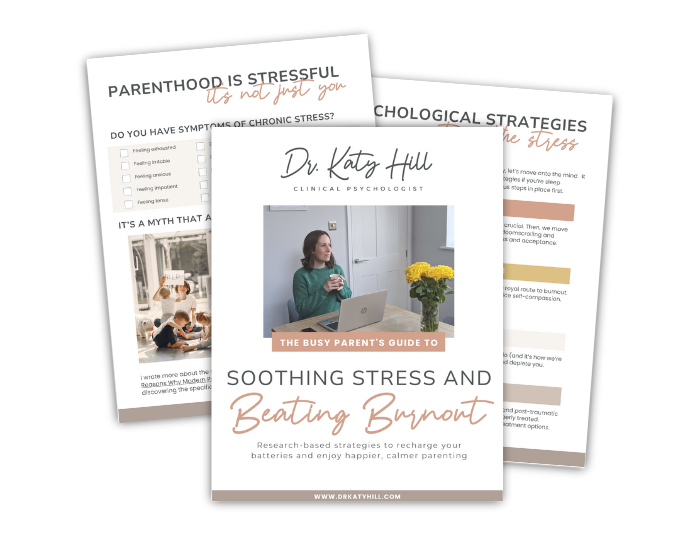
If you’re looking for more support, check out my free eBook, The Busy Parent’s Guide to Soothing Stress and Beating Burnout. It’s full of practical, evidence-based strategies to help you navigate the challenges of parenting with less stress and more balance.