
The end of the school summer holidays is finally in sight. And part of you might feel ready for quiet, for routine, for some mental space or for a fresh, new beginning. Whilst another part of you might just be feeling completely spent. You’ve made it through the long noisy, busy, hot days of summer, and now you’re expected to switch gears and start fresh?
It’s a lot.
We often talk about how the transition to a new school year is a big change for our kids; especially sensitive or neurodivergent ones. But I don’t think we talk enough about how big that transition can be for parents too.
Even if you’ve been counting down to the end of the holidays (because let’s be honest, six weeks is a long time to be ‘on’), it’s OK if this term term doesn’t come with the fresh-start energy you were hoping for. If you feel flat, foggy, or overwhelmed, you’re not doing it wrong. You’re just in transition too.
The Emotional Aftermath of Summer
There’s lots to love about the summer holidays: more sunshine, slower mornings, a bit less routine, no school pressure, more chances to be together. But they can also be relentless. Even if you had childcare, time off work or a holiday, chances are, you didn’t have much rest. You were probably still planning, managing, and co-regulating from morning until night.
For many parents, summer has been a season of noise, negotiation, mess, emotional labour, and near-constant interruption. Even if there were lovely moments, they likely came with a price: more effort, more planning, more stimulation.
So when school starts again, it’s not always a relief. It’s more like a sudden gear change – one where you’re expected to immediately get everyone dressed, fed, packed, and on time, without acknowledging how tired you already are.
The kids go back to school and are expected to be ready to learn. Parents are somehow expected to bounce back too, often parents tell me that they feel like they should start a big new project like getting the house sorted, applying for a new job or starting a new health kick. But we’re often running on empty after a long summer and perhaps what our bodies are really craving is some downtime rather than ramping up a gear.
why this transition can feel so bumpy
Some of it is practical. Suddenly, you’re back to juggling uniforms, packed lunches, after-school logistics, and all the invisible admin that ramps up this time of year. WhatsApp groups get louder. Permission slips start coming home. Term-time structure returns but so does the mental load.
And there’s the emotional layer too.
You might feel guilty that the holidays weren’t as joyful as you hoped. You might be missing the slower pace, while also craving some peace. You might have planned to start September feeling energised and focused but instead, you feel foggy, scattered or a bit low.
Sometimes there are deeper feelings lurking too: sadness that your children are growing up so fast, anxiety about how they’re going to cope in their new school year group, dread about how to get through another term of stretched capacity; shame that you didn’t do ‘enough’ this summer.
All of that is so normal and common; these are thoughts and feelings that most of us parents are familiar with. But because we rarely share these thoughts, it can seem like we’re the only one struggling and spiral into self-criticism: “Why am I finding this so hard?”

The Parental Burnout Quiz
Curious what your own parental burnout score is? Download the free assessment and get your score – plus expert tips on how to reduce it.
Allow yourself time to recalibrate
We often assume that when a new phase of life starts, we should be ready, motivated, clear-headed and find it easy to switch gears. But change – even positive or expected change – puts pressure on our nervous systems. And after a long season of noise, mess and juggling all the things; you probably need time to recalibrate.
There’s nothing wrong with that, it makes sense that when you’ve spent weeks overstimulated, under-rested, or trying to meet everyone else’s needs, it takes time to switch gears.
It’s a big gear shift to go from the lazy pace of summer to the structure of the school term for kids, and it’s no different for us.
A few things that can help
You don’t need to overhaul your routines or fix anything big. But here are a few gentle ideas that can take the edge off this transition; things I often talk through with therapy clients this time of year:
Start with the basics
The early weeks of term don’t need to be super productive or well-structured. If you’re managing sleep, food, movement and connection – for you and your children – that’s a solid foundation. Let that be enough.
Some days might still feel chaotic, but if you’re getting the basics roughly in place, you’re already doing more than you realise.
Let things settle slowly
There’s no deadline for feeling ‘back to normal’ or settled in. Routines take time to re-establish. Energy takes time to return. Be wary of trying to sprint into September just because everyone else seems to be.
If you’re still feeling foggy a couple of weeks in, that’s not unusual. Transitions can last longer than we think; especially after intense or overstimulating seasons like the long school summer holidays.
Expect mixed feelings
You might feel relief, sadness, motivation, fatigue, hope and anxiety. Sometimes all in the same morning. You might have a day where you feel motivated followed by one where you just want to lie down and cry. That’s OK, allow yourself to feel what you’re feeling. You don’t need to fix your feelings, you just need to let them have some space and settle in their own time.
Be kind to your past self
You might be thinking about all the things you didn’t get around to over the summer – the activities, the special moments, the rest you were hoping for.
But that version of you was likely doing the best they could. Try to meet them with compassion, not criticism. You weren’t lazy or ungrateful – you were doing the best you could with the resources you had at the time.
Include yourself in the reset
It’s easy to let September become all about your children – their routines, their clubs, their emotions. But you matter in this too.
Try to carve out even a little space for things that make you feel grounded. Each year I book at least a day or two off work so I can just laze around the house and soak in the silence and the lack of demands. It recharges my batteries during this upheaval and helps me feel more regulated before I start to see therapy clients again.
You might not be able to book whole days off but perhaps you can slot in something just for you; a walk, a phone call, a quiet hour with something that’s just for you.
If you're still not feeling ok
For many parents, these first few weeks of term feel unsettled but gradually ease. Once everyone becomes more familiar with the new rhythm, things start to feel more manageable.
But if it’s not lifting; if it’s feeling heavier and you’re noticing persistent anxiety, low mood, non-existent energy or dread that could be a sign that you’re not just tired; you’re carrying too much and maybe burning out.
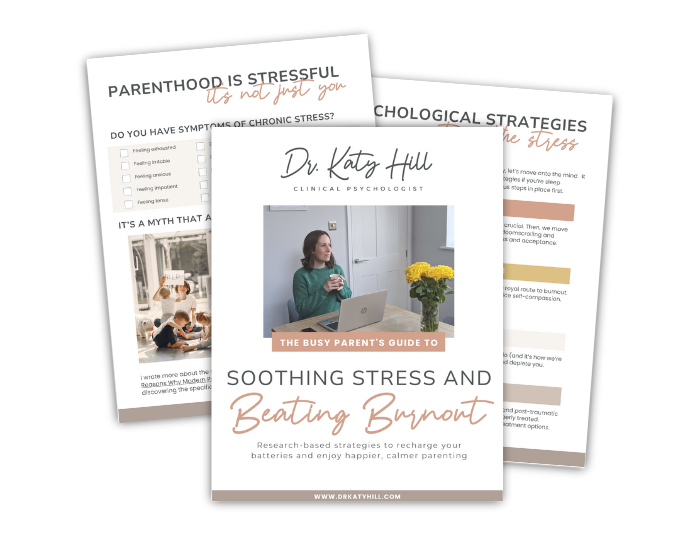
You don’t have to fix that alone. Sometimes talking things through with a family member or friend who gets it helps. My free eBook The Busy Parent’s Guide to Soothing Stress and Beating Burnout is a good place to start if you’re feeling frayed at the edges and want to establish some stress-relieving habits.
And if you need something more – space to unpack the pressure, the expectations, the inner critic – therapy can help with that too. I work with parents who are feeling stretched thin and together we make space to recharge and reconnect with what really matters. You can find out more about my services here.