The school holidays are here again. Six long weeks of no packed lunches, no frantic school runs…and no real break for most parents.
For some, summer feels like a chance to slow down. For others, it feels like swapping one kind of busy for another. The juggling doesn’t stop; it just changes shape. We’re still working, still managing childcare, still prepping snacks, applying sunscreen, breaking up sibling squabbles, and answering a hundred questions before lunchtime. And somewhere in the middle of all that, there’s often a background pressure to ‘make it magical’.
We’re told summer should feel carefree. Like a time to make core memories. But for many parents, it doesn’t feel lighter at all; it feels heavier. Everything is still happening, and most of it still falls on us.
I see this in my therapy work with parents every year: the mix of exhaustion, guilt, and overwhelm. And I feel it myself too.
So this year, I’m not aiming for a perfect summer. I’m not even aiming for a stress-free one. I’m just thinking ahead about what will help me get through it without setting myself up to fail.
Letting it be ordinary
There’s nothing wrong with wanting to make good memories over the summer. Most of us do. But when we put pressure on ourselves to make all the memories, all the time, it starts to backfire. The reality of parenting (and life in general) is always a mix of moments – some lovely, some loud, some where you’re just counting down the minutes to bedtime. Summer doesn’t change that.
Starting the holidays by accepting this makes a difference. Some days will be joyful. Some will be chaotic. Most will be somewhere in between. That’s not a sign of anything wrong; it’s just life with children.
Keeping a gentle routine
There’s lots of advice about letting kids be bored in the holidays to spark creativity and build resilience. And I agree with that, up to a point.
But in my house, like in lots of families, it’s not that simple. All of my children are neurodivergent (as am I), and boredom doesn’t always lead to creativity for us – it can lead to anxiety, agitation and meltdowns. For us, having a basic routine is what makes life smoother, not harder.
That usually looks like getting out of the house in the morning ( easy stuff like going to the park, the library, the shops, or to see local friends) then having a quieter afternoon at home. It’s not a rigid schedule, but it gives the day some shape and helps everyone know what to expect.
I’ve also noticed that once my kids have had a bit of social and movement time, they often are happier to occupy themselves in the afternoon and I get some well needed ‘me-time’.
Children thrive on predictability, as do most of us adults. A little structure helps prevent the “What are we doing now?” spiral from starting too early or too often.
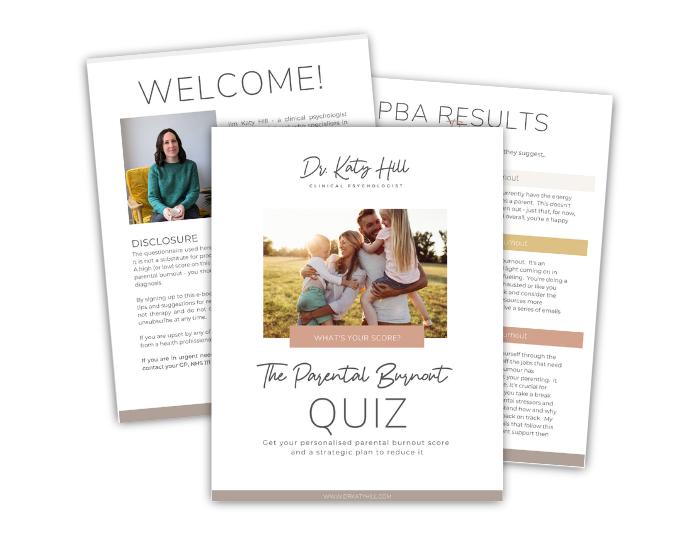
The Parental Burnout Quiz
Curious what your own parental burnout score is? Download the free assessment and get your score – plus expert tips on how to reduce it.
planning for the hard parts
Every year I tell myself I’ll make the most of summer and just enjoy it. And every year, something happens to remind me that I’m not a robot or a saint. Parenting is intense, and summer tends to dial everything up a notch. There’s more noise, more mess, more humidity, more of the same sibling arguments on repeat.
So this year, I’m planning for that. I can’t fix it, but I can soften the edges.
When things get loud, I’ll use my ear defenders or step outside for a minute instead of trying to power through. When I feel my shoulders creeping up towards my ears, I’ll pause for a breath. And when everyone’s fractious, I won’t try to talk them out of it – I’ll put the TV on and make a cup of tea.
Psychologists call this skill ‘coping ahead’. It’s about knowing what’s likely to happen, and having a plan for what you’ll do when it does. It’s not about perfect regulation or preventing all issues – it’s about small course corrections that help you stay afloat.
using screens when we need them
There’s always a lot of guilt about screen time, but the research is more forgiving than the headlines. It’s less about the number of minutes and more about how screens are used, what’s being watched, and whether they’re balanced with other things.
In our house, screens are part of the summer toolkit. Sometimes they’re for fun. Sometimes they’re for survival. Either way, they give us all a break when we need it. And that’s enough.
Letting people help (even if it's not my way)
I’m reminding myself this summer that I don’t have to do it all alone. That might mean asking for help, even when it feels awkward. It might mean saying yes when someone offers, even if the help isn’t perfect. It might mean letting my husband handle things in his own way, without stepping in to tweak the details. My older children are quite capable of making their own sandwiches for lunch and letting them do that (despite the mess) is a great way to foster life skills and confidence.
We’re not meant to parent in isolation, but many of us end up doing exactly that – especially in the summer, when formal support structures often fall away. This year, I’m trying to say yes to support without overthinking it.
remembering that it's my summer too
One of the things I often think is how easy it is to make summer all about the kids. Their activities, their snacks, their memories. The whole season starts to revolve around keeping them entertained and happy (you’ll notice this happens at Christmas time too).
But it’s my summer too. So part of surviving the holidays is letting myself enjoy them.
That might mean reading my own book at the park while the kids play, instead of being drawn into every game. It might mean arranging to meet a friend for lunch, or watching something I actually want to watch at the end of the day, with snacks that weren’t picked by someone else. It might mean saying no to another round of Uno when I’m touched out and tired, and choosing something for myself instead.
Parenting can be relentless at times, but I’m still a person with my own preferences and pleasures. I’m allowed to have a summer that includes some of those too.
letting some things go
The house will be messier this summer. The washing pile will grow. Some dinners will be beige. Some plans will get cancelled. That’s not a huge problem; it’s just how life goes when you’re carrying a lot.
I’m letting go of the idea that I need to be productive or present in every moment. Some days will be for survival. Some will be for connection. Most will be a mix. That’s fine.
need more help managing stress?
You can love your children and still find the summer holidays exhausting. Both things can be true.
If you’re reading this and thinking, “This all sounds nice but I still don’t know how I’ll get through it,” you’re not doing it wrong; you’re just doing too much of it alone.
That’s the kind of thing therapy can help with. I work with parents who are stretched thin, trying to juggle too much, and wondering why they can’t just ‘cope better’.
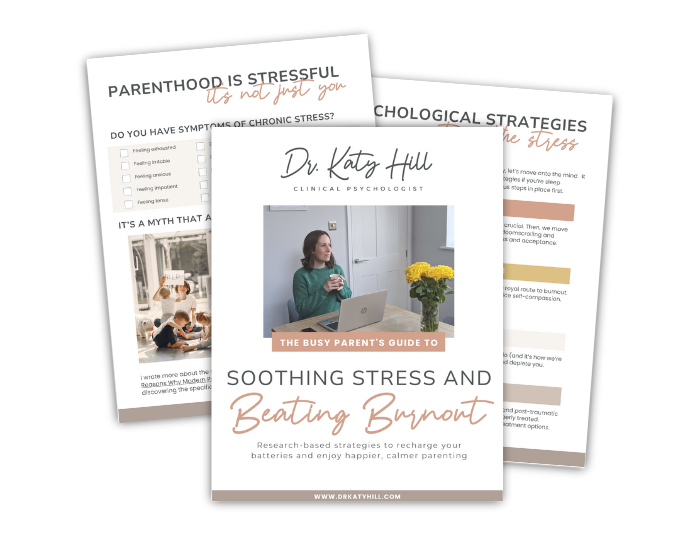
If you’re looking for more support, start with my free eBook, The Busy Parent’s Guide to Soothing Stress and Beating Burnout. It’s full of practical, evidence-based strategies to help you navigate the challenges of parenting with less stress and more balance.